


Metal Z and C Purlin
Request a Call Back
Description:
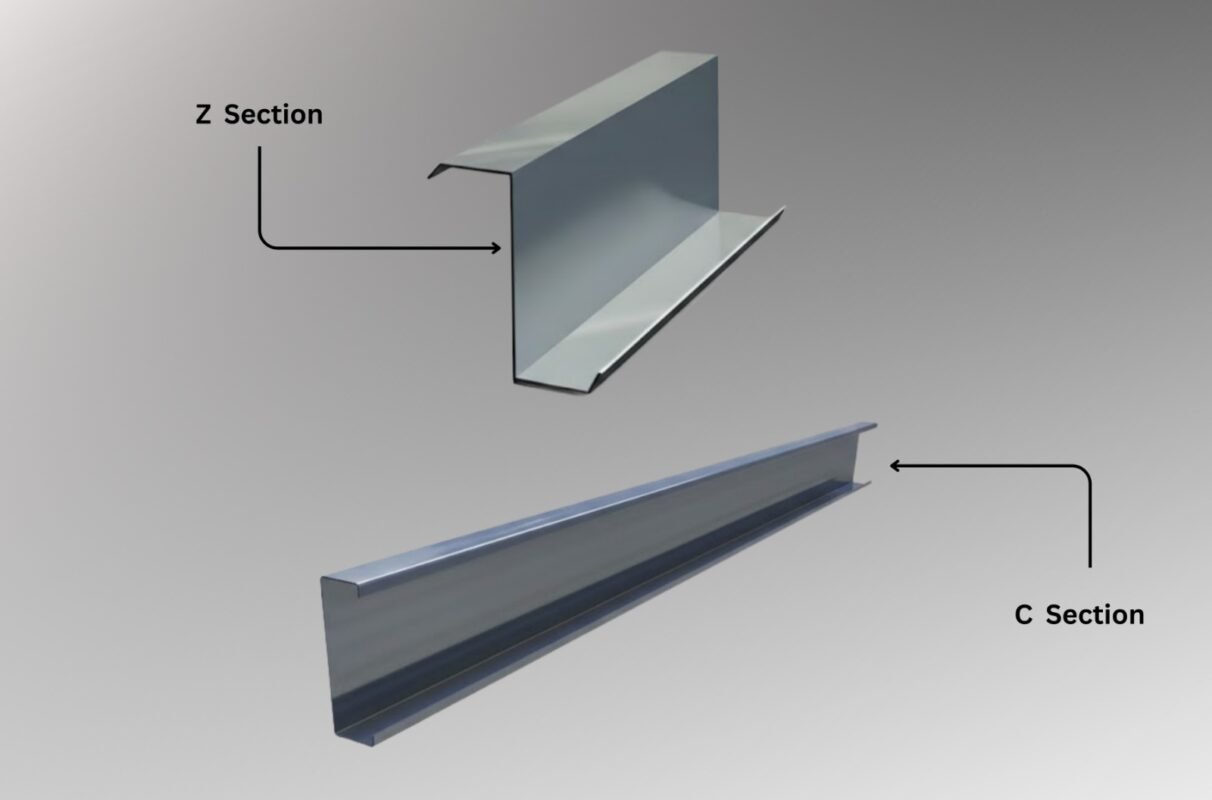
Metal Z and C Purlins are structural components used in roofing and wall framing systems to provide support for loads from the roof or wall cladding. These purlins are available in two profiles: Z and C, which refer to the shape of the cross-section. Z and C purlins are lightweight, durable, and highly efficient in supporting large spans without compromising structural integrity. They are commonly used in steel buildings, warehouses, factories, and other industrial and commercial structures.
|
Item |
Details |
|---|---|
|
Material |
Hot-Dip Galvanized Steel / Mild Steel |
|
Coating |
Zinc Coated (Galvanized) |
|
Thickness |
1.5 mm to 3.0 mm |
|
Profile |
Z and C-shaped cross-sections |
|
Length |
Customizable (Up to 12 meters) |
|
Width |
100 mm to 400 mm (Depending on Profile) |
|
Standards |
ASTM A36, IS 2062, EN 10346 |
Raw Materials:
Metal Z and C Purlins are manufactured using high-quality galvanized steel or mild steel, providing excellent resistance to corrosion, load-bearing capacity, and structural strength. The galvanization ensures durability even in harsh weather conditions.
RAL Colors Available:
Metal Z and C Purlins are generally not color-coated, as they are structural elements and are usually hidden beneath cladding or roofing sheets. However, they can be painted or coated if required for specific projects.
Features:
- Lightweight yet strong, reducing the load on the overall structure.
- High resistance to corrosion and weather conditions, especially when galvanized.
- Easy to handle and install, leading to reduced labor costs.
- Versatile in application, allowing for use in both roofing and wall cladding support.
- Available in various sizes and lengths to suit specific project needs.
Applications:
Metal Z and C Purlins are widely used in various structural applications where load support is required. Typical uses include:
- Roof and wall support systems in steel buildings.
- Industrial and commercial structures such as warehouses, factories, and shopping centers.
- Agricultural buildings, including barns and storage sheds.
- Carports, canopies, and other outdoor structures.
- Pre-engineered building systems and modular construction.